- Revenue Diaries
- Posts
- Revenue Diaries Entry 60
Revenue Diaries Entry 60
Inside: Identity Change, Death, Dogs, and Talking About Loss

Kyle Lacy
January 04, 2026
Welcome to 2026, my friends. I have two things for you on this Sunday, before many of us get back to the grind and our routines. It was quite the doozy of a holiday break for the Lacy family.
On dogs and talking to kids about loss.
On a simple reframing of how we think about identities and change
May all your hopes, dreams, and goals be met with enthusiasm in this new year.
♥️ kyle

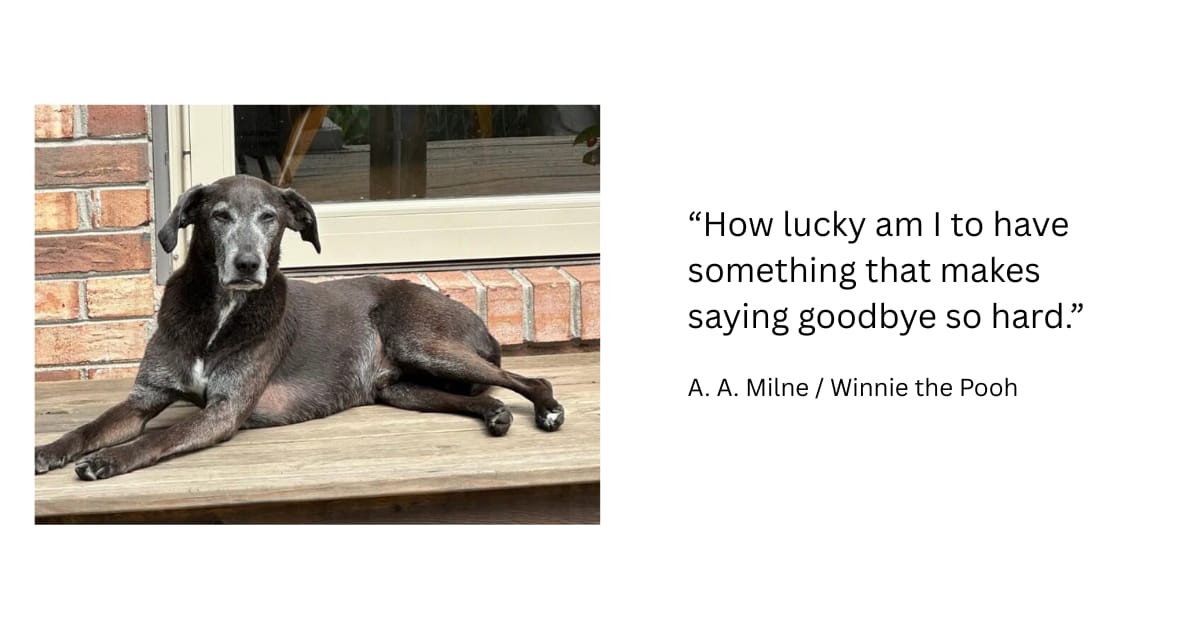
Asher Lacy 2012-2025
On Dogs & Talking to Your Kids About Loss
Outside of half the family being sick over the holiday break, we had to say goodbye to our dog, Asher, on New Year’s Eve. He was around for almost thirteen years… Long enough to exist before our kids, before the new jobs, before the seven homes spread over two states.
Long enough that he was more than a dog, he was family.
He wasn't the most affectionate dog. I’d say he was more aloof than anything else.
He didn't make a ton of doggy friends. He was kicked out of two doggy day cares for mix-ups with other dogs.
He absolutely hated trailers. Would bark and chase anything being pulled by a vehicle.
He barked at any kids on a scooter. He hated them, unless it was our kids.
He ate absolutely everything that smelled even remotely like food. Nothing on the counter was safe. And because of that, he consumed more plastic than any dog should.
He threw up more times than I can count (plastic adjacent).
But he was our constant over all the moves and changes in life.
He loved walks, LOVED walks.
He loved his food. 6 am / 6 pm feeding times were the highlights of the day.
He loved really soft blankets and sleeping in our bed.
He was always up with me, no matter how early.
But mostly, he loved us.
We don't deserve dogs.
The decision to end his life was 100x harder than I thought it would be, and it only compounds when trying to decide how to break the news to the kids. It’s really, really difficult to find the right words for a change that is so extreme.
How do you explain loss without making it too confusing?
How do you answer their questions in a meaningful way?
Do you say everything?
What does “goodbye” actually mean when someone they love is being taken away?
So, in hopes of helping some of you in the future, here’s how we handled it. And yes, I spent a good thirty minutes writing out the script multiple times, so I didn’t screw it up when talking to them. The robots also helped with some ideas.
“We need to talk about Asher. You know his body is very tired, and it isn’t working the way it used to. We tried our hardest but the doctors can’t make him better anymore.”
We tried to avoid euphemisms like “going to sleep.” I didn’t want my kids to take anything literally; the last thing I need is for one of them to be afraid of going to sleep at night.
“Because we love him, we’re going to help him die peacefully today so he isn’t hurting anymore.”
I wanted to make sure they understood that everything we are doing is an act of care and not of abandonment.
“He won’t be scared. He won’t be in pain. We will be here with him, and he will be okay.”
I read somewhere that kids often worry more about the suffering than the death itself. I may have made that up, but it helped in the moment.
“You might feel sad, mad, confused, or even not feel much right now. All of that is okay.”
I knew our two kids would deal with it differently. Our oldest was more focused on our cat and didn’t have an outwardly emotional response (which is A-okay). Our youngest felt every emotion and showed it.
“We’re going to miss him for a long time. And that’s because he mattered and we love him.”
This helps them understand that sadness isn’t a problem; it’s just evidence of how much we loved him.
It was still hard, and I still stumbled over my words, but it was important to talk it out and experience loss as a family. Also, it was the first time I’ve cried in front of my kids. Super important.
As an aside, big thank you to Lap of Love, who has an incredible in-home service to help with the tough decision. Highly recommend checking them out if you are in a similar situation.
The attending vet from Laps of Love sent me this quote, which I absolutely love:
“How lucky am I to have something that makes saying goodbye so hard.” A. A. Milne / Winnie the Pooh
Here's to you, Asher Lacy. May your future days be spent chasing trailers, consuming whole loaves of bread (with some of the plastic bag), and taking long walks.
You will be missed.
On Who Are You Practicing Being?
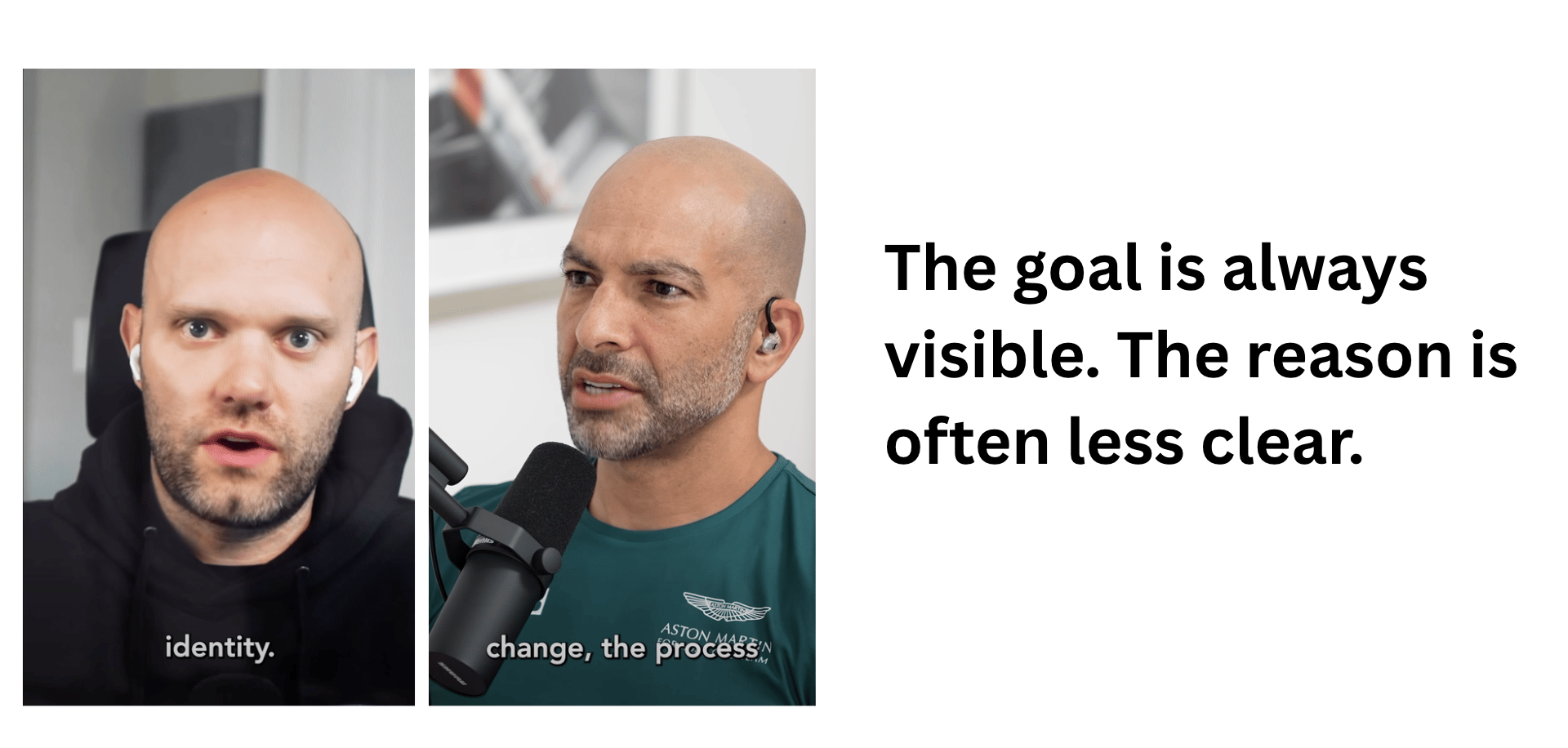
I was doing the normal scrolling while waiting for takeout the other night. I happened across a conversation between Peter Attia and James Clear that clearly articulated what has been on my mind recently, as I think about this new year and goals.
Well, more than goals. It’s really about how we change for the better.
When most of us think about changing something, we start with a destination… the end goal. Makes complete sense, right?
“I need to lose 30 lbs.”
“I want to run a marathon.”
“I want to run four miles.”
“I want to stop eating sugar.”
“I want to get better sleep.”
“I want to stop smoking.”
“I want to stop drinking.”
From there, like most esteemed professionals, we design a process and hope the discipline fills the gaps. It’s familiar. And I think it’s also why so many of us struggle to reach the destination in the first place.
The goal is always visible. The reason is often less clear.
What Peter and James talk about is true change. It’s an identity change over an activity change. It’s an identity formed through repetition.
Making the bed isn’t really about the bed. It’s about seeing yourself as someone who is clean and organized.
Playing basketball every afternoon isn’t about the exercise. It’s about practice and becoming someone who plays.
Repetition creates consistency. Show up enough times, and the activity stops feeling like effort and becomes part of who you are.
James captures this perfectly:
“Imagine you went up to two people, and you said, ‘Hey, would you like a cigarette?’ And the first person says, ‘Oh, no, thanks, I’m trying to quit.’ And the second person says, ‘Oh, no, thanks, I’m not a smoker.’ Now, technically, they’ve done the same thing. They’ve both turned down the cigarette. But the second person has signaled a shift in identity. The first person is trying to be something they’re not. And the second person is saying, ‘This is just not something that I do.’”
It seems so simple. Haha, almost too simple. Both people made the same choice in the moment. The difference was the story they were telling themselves about who they are. One person is still negotiating, which most of us do. The other has settled something internally.
The behavior follows that decision. Not the other way around.
Repetition shapes how we see ourselves. At some point, you’re no longer pushing toward a future version of you. You’re acting in alignment with something that already feels true.
It’s hard not to see how this applies to our professional lives, too. It’s something I want to be more intentional about correcting and reinforcing. Repetition of the important things builds the right culture, whether we plan for it or not.
So I’m going to start asking myself one question as often as I can throughout the day.
Kyle, who are you practicing being today?